‘From Berlin to Belgrade and Barcelona: The story of Wolves in Europe’ by club historian, Pete Crump
As a founder member of English league football, Wolves are also pioneers of the European game, with the club having played a vital part in the formation of competitive continental football.
Floodlit friendly fixtures at Molineux ensured the Wolves name was known across the world as well as being the catalyst for the creation of the European Cup.
This is part 3 of the series on Wolves in Europe. To read part 1, focusing on the Old Gold’s early European Cup impact, please click here, and for part 2, reflecting on the run to the 1972 UEFA Cup final, click here.
UEFA Cup 1973/74
Wolves qualified for the UEFA Cup in 1973/74 in circumstances that would not be seen today. The 1972/73 season was a solid and strong one for Wolves. We finished fifth in the First Division and we also got to both domestic cup semi-finals. In the League Cup semi-final, we lost to – yes, you guessed it – Spurs, narrowly once again. Wolves also had some bad fortune in the FA Cup semi-final at Maine Road, where we lost to Leeds United.
After Spurs had beaten us in the League Cup semi-final, they won the League Cup by beating Norwich City in the final. Spurs had finished eighth in the First Division; however, their League Cup win commanded a UEFA Cup spot.
This was bad news for North London neighbours Arsenal. They had finished second in the First Division but were effectively barred from competing in the UEFA Cup because there was a rule at the time that only one club per city could play.
The League Cup winners took precedence over second place, so the spot went to the next-highest finishers in the league, which, luckily, was Wolves. Liverpool had won the league and gone into the European Cup, while third placed Leeds United and fourth placed Ipswich Town also went into the UEFA Cup with us.
Our UEFA Cup run started very similarly to that of 1971/72, with a trip to Portugal. Wolves travelled to face Belenenses in September 1973, winning 2-0 at Estadio do Restelo in Lisbon, with John Richards and Derek Dougan scoring the goals.
The game, interestingly, saw John Richards uncharacteristically receive a red card for retaliating to Belenenses centre-back Minervino Pietra.
Wolves confirmed their progression back at Molineux the week after. Young striker Peter Eastoe and Jim McCalliog with goals in the 2-1 win which took Wolves through to the second round.
UEFA Cup 1972/73 | First round, first leg
Wednesday 26th September 1973
Belenenses 0
Wolves 2 (Richards 10, Dougan 54)
Attendance | 9,825
UEFA Cup 1972/73 | First round, second leg
Wednesday 3rd October 1973
Wolves 2 (Eastoe 26, McCalliog 72)
Belenenses 1 (Murca 7)
Attendance | 16,010
Wolves win 4-1 on aggregate
After beating the Portuguese, it was another interesting East German side that Wolves faced in the next round. Wolves travelled to Zentralstadion to face Lokomotive Leipzig. It was, however, the most disappointing of our away trips in all of our UEFA Cup adventures so far.
Wolves were beaten 3-0 on the night in Leipzig, which left an uphill battle for the Molineux return. Wolves were only one down until they conceded a penalty after Frank Munro had fouled Hans Matoul. It was Matoul himself who converted the penalty after he had also scored the only goal in the first half.
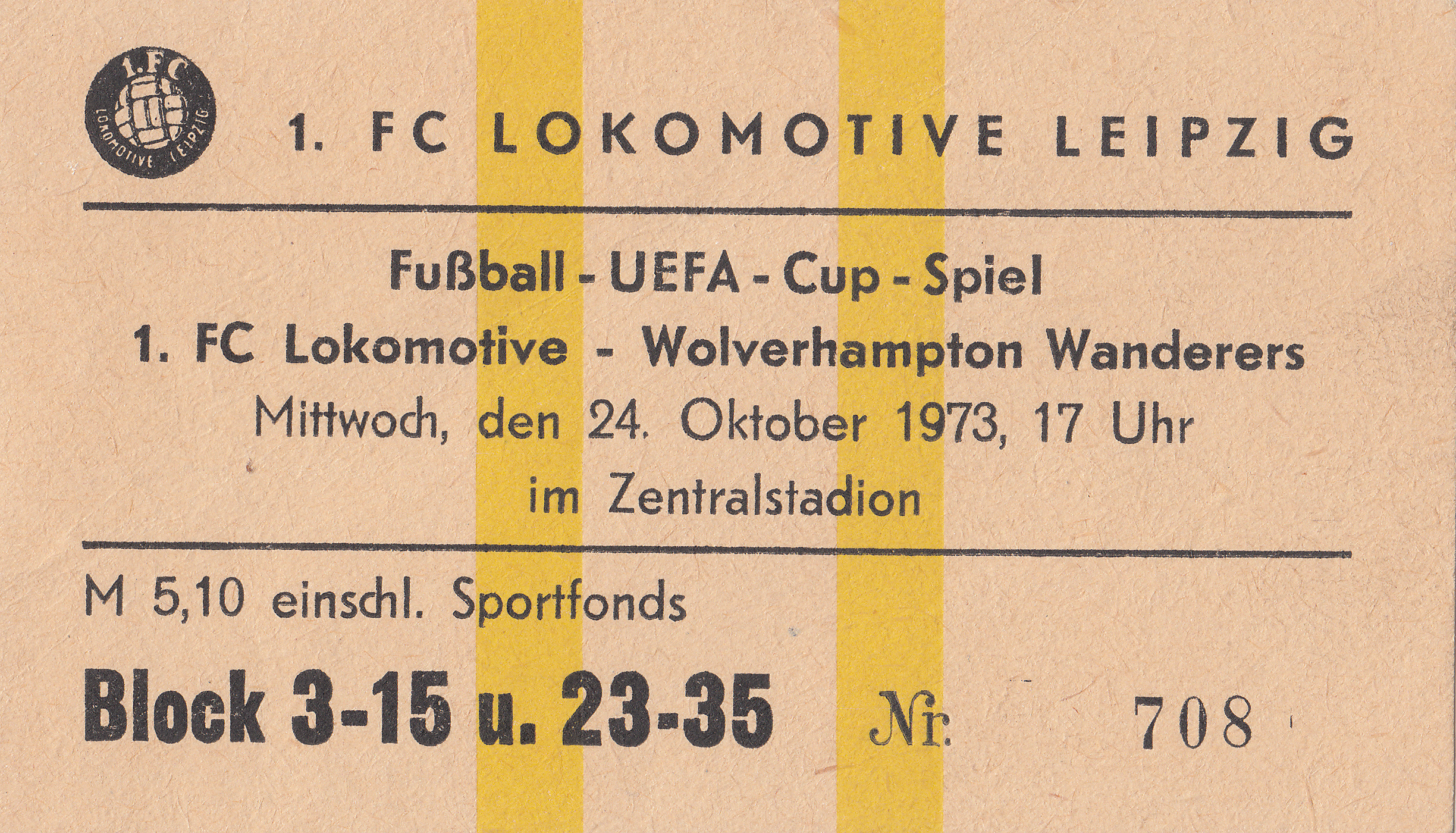
Lokomotive made it three in the 82nd minute, while Wolves also saw Jim McCalliog sent off for dissent towards the referee after the game had ended.
Wolves were struggling for numbers in the second leg. Jim McCalliog was suspended, Frank Munro was also ill but soldiered on with the flu, Peter Eastoe had also been recalled from a loan spell at Swindon Town, but he also returned injured. Danny Hegan’s time at the football club was also nearing the end having been dismissed the day before this game and would never play for Wolves again, transferring to Sunderland shortly afterwards.
The second leg began well for Wolves who were two up by the 65th minute through goals from Steve Kindon and Frank Munro, however Lokomotive pulled one back and the goal by the East Germans in the 73rd minute proved costly for Wolves. This was despite the Doog scoring almost immediately after and Kenny Hibbitt making it four in the 82nd minute. Wolves could not find the goal they needed in the final eight minutes of the tie and despite a valiant attempt and a 4-1 win, Wolves were out on the away-goals rule.
UEFA Cup 1972/73 | Second round, first leg
Wednesday 24th October 1973
Locomotive Leipzig 3 (Matoul 37, 75 pen, Koditz 82
Wolves 0
Attendance | 16,860
UEFA Cup 1972/73 | Second round, second leg
Wednesday 7th November 1973
Wolves 4 (Kindon 52, Munro 65, Dougan 74, Hibbitt 82)
Locomotive Leipzig 1 (Lowe 73)
Attendance | 14,530
Wolves draw 4-4 on aggregate. Leipzig through on away goals.
UEFA Cup 1974/75
It was a quick-fire return to the UEFA Cup in 1974. Wolves finished 12th in the First Division in 1973/74, however, we won the League Cup after beating Manchester City 2-1 at Wembley which meant Wolves were back in the UEFA Cup again.
This was the third time we had played in the UEFA Cup in four years and in every single campaign so far, including this one, we started our journey in Portugal. But this time, it was against Porto in a truly entertaining tie which saw goals galore.
Wolves were truly beaten at Estadio das Antas, going 3-0 down at half-time. The visitors were 1-0 down after two minutes with an own goal from John McAlle and although Mike Bailey did pull one back in the 63rd minute, this was cancelled out by Porto’s fourth in the 69th minute.
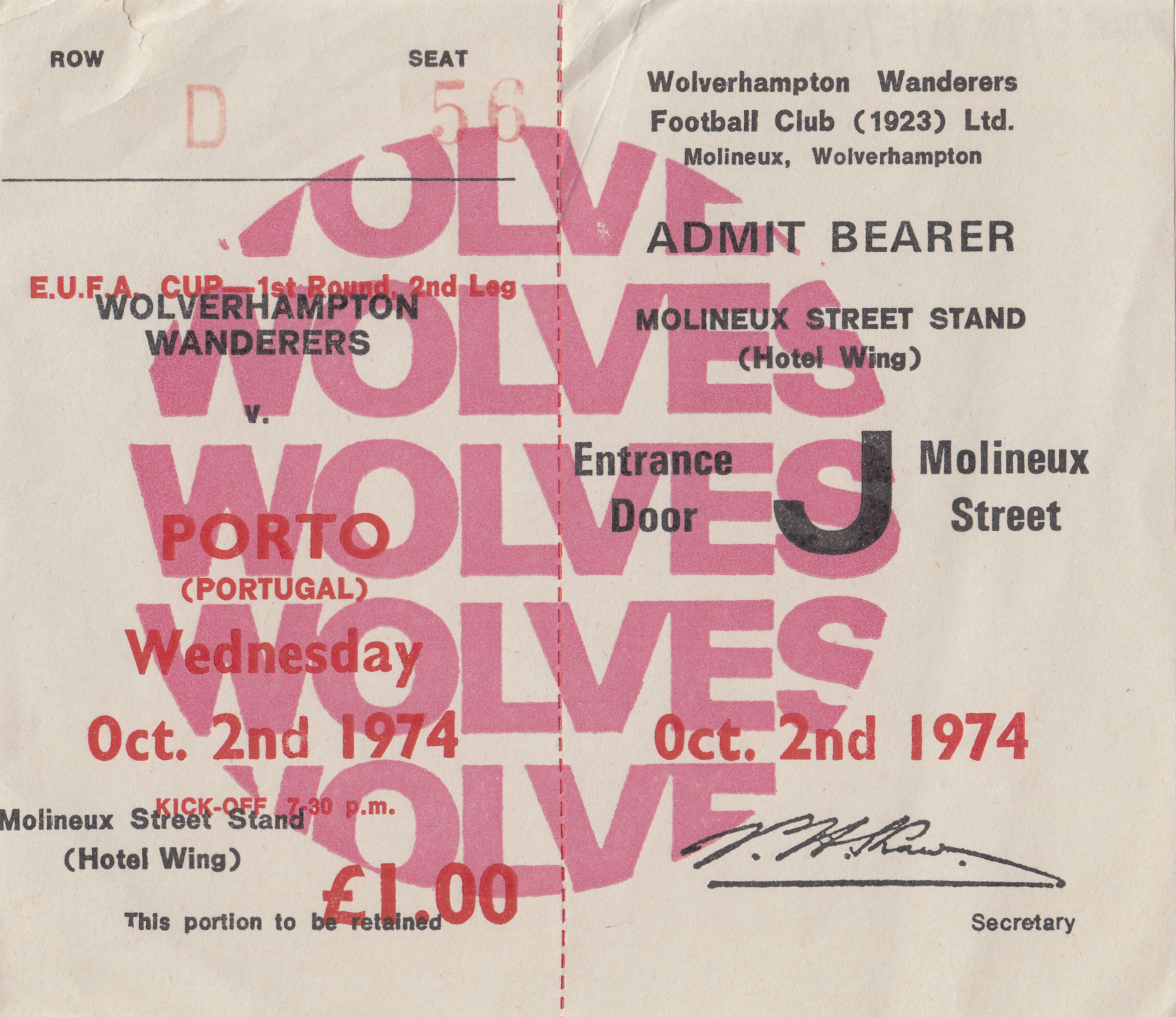
It was an uphill task for Wolves at Molineux in October 1974. Despite this, it was another valiant attempt, and although Wolves did win on the night 3-1, it wasn’t enough and they exited the tournament 5-4 on aggregate.
UEFA Cup 1974/75 | First round, first leg
Wednesday 18th September 1974
Porto 4 (McAlle 2 og, Cubillas 37, Flavio 41, Gomes 69)
Wolves 1 (Bailey 63)
Attendance | 39,529
UEFA Cup 1974/75 | First round, second leg
Wednesday 2nd October 1974
Wolves 3 (Bailey 4, Daley 46, Dougan 80)
Porto 1 (Palmer 37 og)
Attendance | 15,924
Wolves lose 5-4 on aggregate
After this tie, Wolves would have to wait another six years before a return to Europe.
UEFA Cup 1980/81
To date, this is our penultimate time in competitive European action, and as many know, we have only had one campaign since. We qualified for the 1980/81 UEFA Cup by winning the League Cup in 1980, beating Nottingham Forest 1-0 at Wembley. The team also had a good season in the league during 1979/80, finishing sixth in the First Division.
There was a slight difference for this campaign compared to previous seasons in Europe – it did not start in Portugal! We did, however, travel to a country we had visited in the 1971/72 run, namely the Netherlands, but this time it was to face PSV Eindhoven.
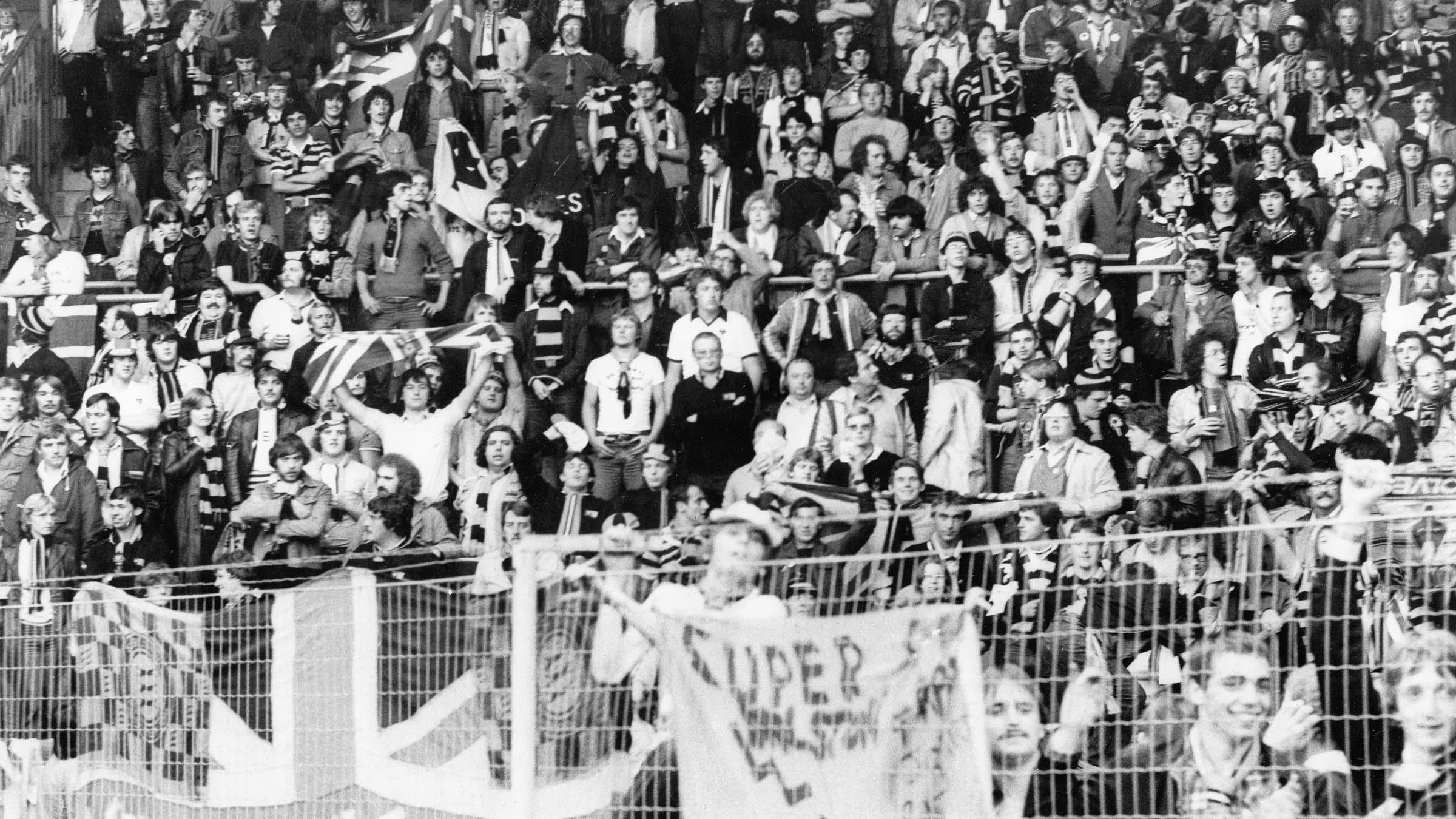
Wolves travelled to Eindhoven in September 1980, and around 1,000 Wolves supporters made the trip to the Netherlands. In fact, at the time, they received a lot of praise from PSV officials, coach companies, sea authorities and hoteliers for their behaviour and conduct. This is quite unusual to read for this era of football, as there were lots of problems with hooliganism – especially in the 1970s and 1980s – and there had been lots of trouble with English sides in Europe, as well as the English national side.
Wolves played at the Philips Stadion and the players also visited the famous Philips factory while they were over.
The away trip to the Netherlands also saw a rare start for Dave Thomas. The hugely talented Thomas only played 16 times for Wolves, and it is well documented that there were issues between Thomas and the Wolves management about the winger not wearing shin pads. Despite being named player of the match, this was Thomas’ final ever appearance and his only one in 1980/81.
In Eindhoven, Wolves had gone 1-0 down in the 34th minute. Although Andy Gray equalised just before half-time, Wolves conceded two in the second half, including a penalty after Uruguayan Rafael Villazan was adjudged to have fouled Adri Koster.
Could Wolves turn it around at Molineux in October 1980? The hosts went 1-0 up after 30 minutes courtesy of Mel Eves, but Eves’ goal would be the last goal Wolves scored in Europe for 39 years.
Wolves were gaining control of the game until the floodlights failed in the 38th minute. They were out for around 25 minutes and this was extremely frustrating, however, this also happened in the first leg too.
The Wolves supporters were once again praised for their conduct and their patience by UEFA officials and there was a Tannoy announcement to reflect this. This is also more impressive as the floodlight failure had come at a really bad time for Wolves.
Wolves wore all gold at Molineux that evening and we believe this could well have been the first time since 1969. We also believe it may well be the last time we have worn all gold at home until we played Racing Santander in this season’s pre-season friendly. Wolves supporter Pete Britton and a recent Facebook appeal helped remind us of this.
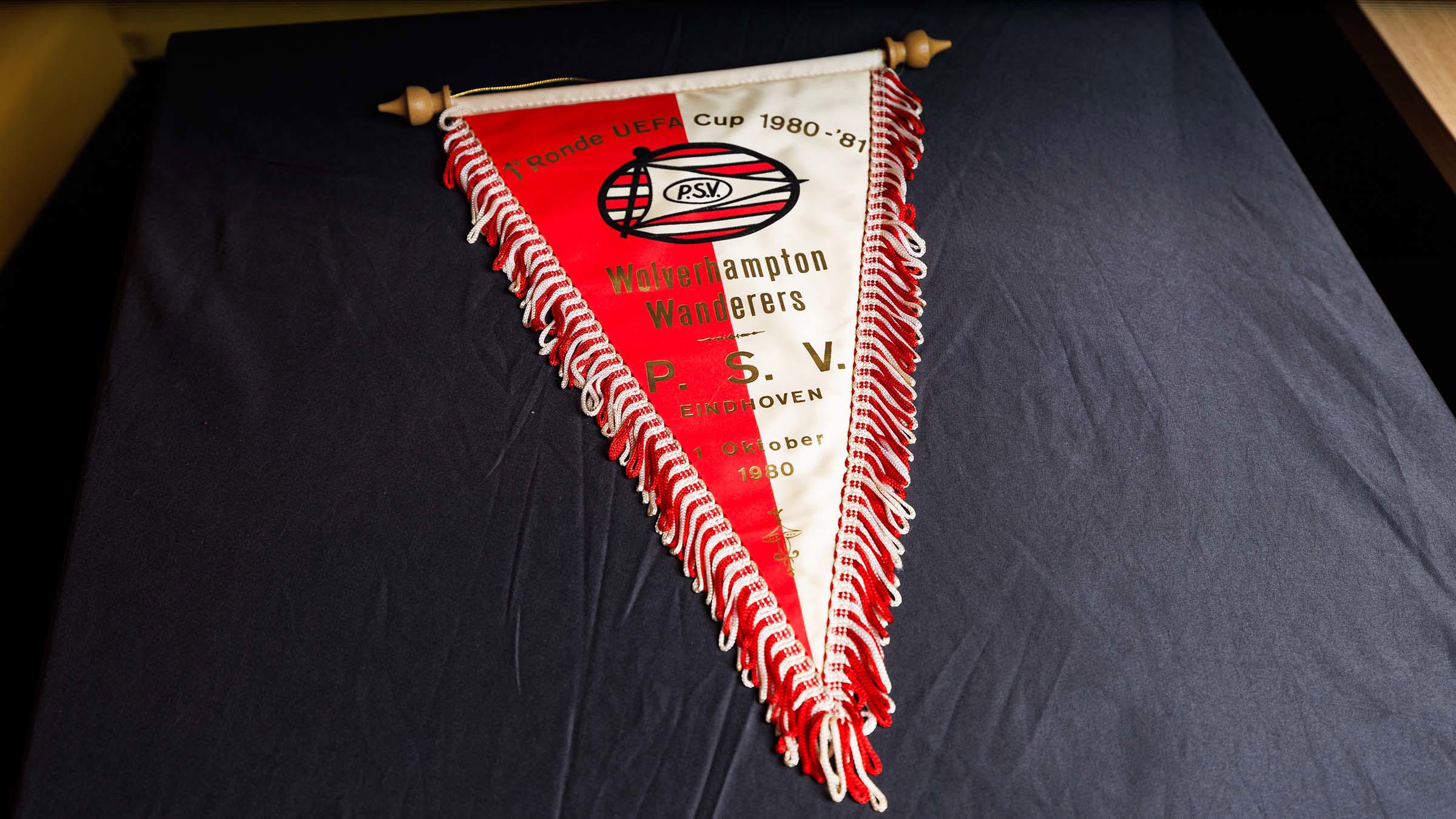
Interesting opponents in the PSV team were the van der Kerkhof twins – Rene and Willy. Rene came on trial at Wolves in the summer of 1981 and played in a pre-season friendly/practice game against Chesterfield at Castlecroft in August 1981, but he didn’t end up signing.
This was our final foray into Europe for nearly four decades. Having played in the UEFA Cup four times since 1971/72, we would not play in Europe again until 2019.
UEFA Cup 1980/81 | First round, first leg
Wednesday 17th September 1980
PSV Eindhoven 3 (Brandts 34, van der Kraay 66, van der Kuylen 75 pen)
Wolves 1 (Gray 46)
Attendance | 28,890
UEFA Cup 1980/81 | First round, second leg
Wednesday 1st October 1980
Wolves 1 (Eves 30)
PSV Eindhoven 0
Attendance | 20,717
Wolves lose 3-2 on aggregate
Wolves and the Anglo-Italian Cup
Before the UEFA Cup existed, UEFA would award the winners of the League Cup a place in the Inter-Cities Fairs Cup, but in 1967, QPR lifted the cup by beating West Bromwich Albion in the final, with former Wolf Mark Lazarus scoring the decisive goal.
However, QPR’s victory posed a problem. UEFA didn’t allow teams from the third tier to compete in the Fairs Cup, so unfortunately for QPR, they had to miss out on a European campaign.
Two years later, in 1969, a similar situation occurred when Swindon Town won the League Cup. This time, to compensate Swindon for the ruling, a game against the winners of the Coppa Italia was organised, and Swindon played AS Roma in a two-legged match dubbed the Anglo-Italian League Cup.
Due to both its popularity and an extended close season the following summer because of the Mexico World Cup, an official Anglo-Italian Cup competition was launched.
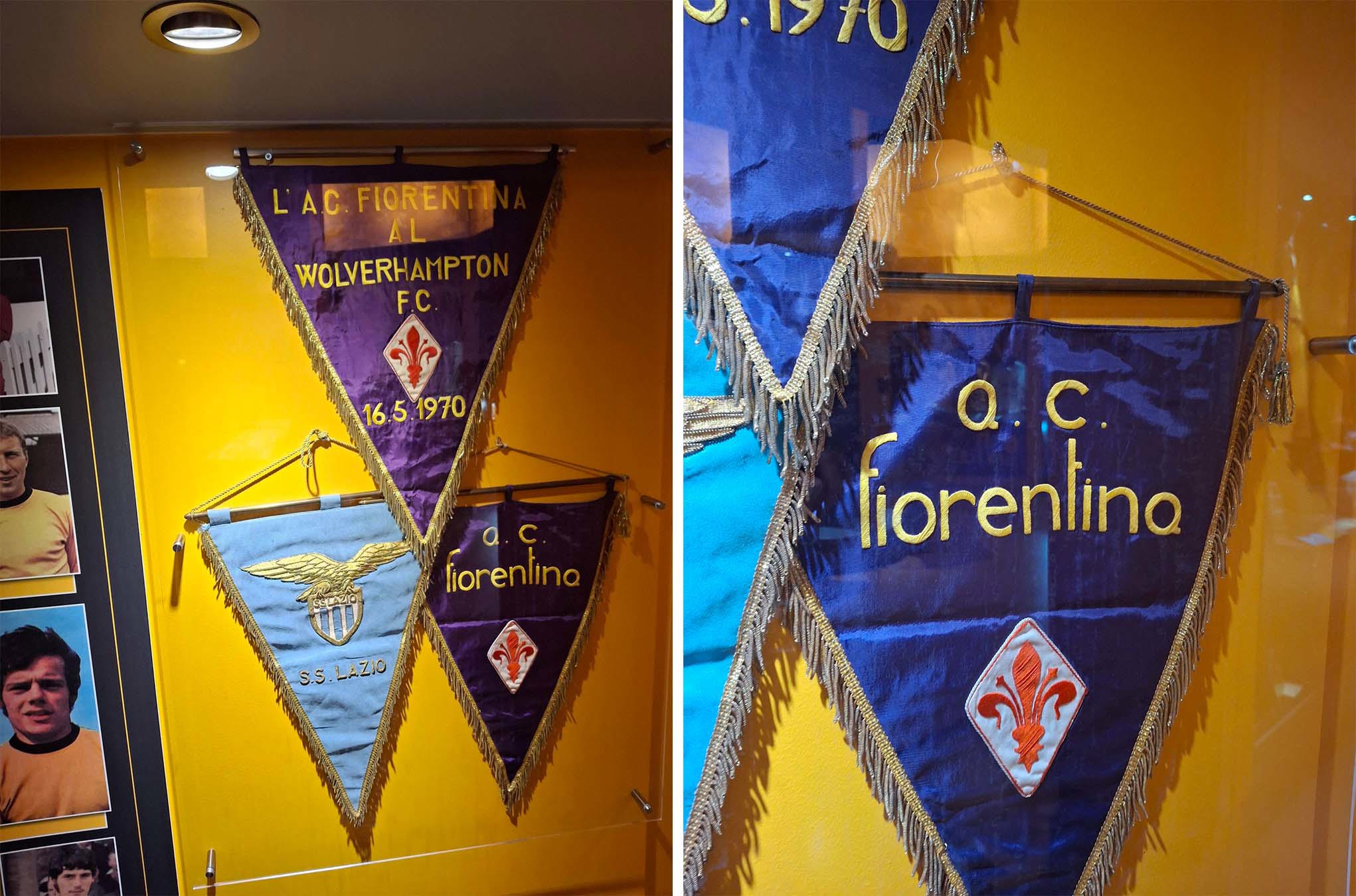
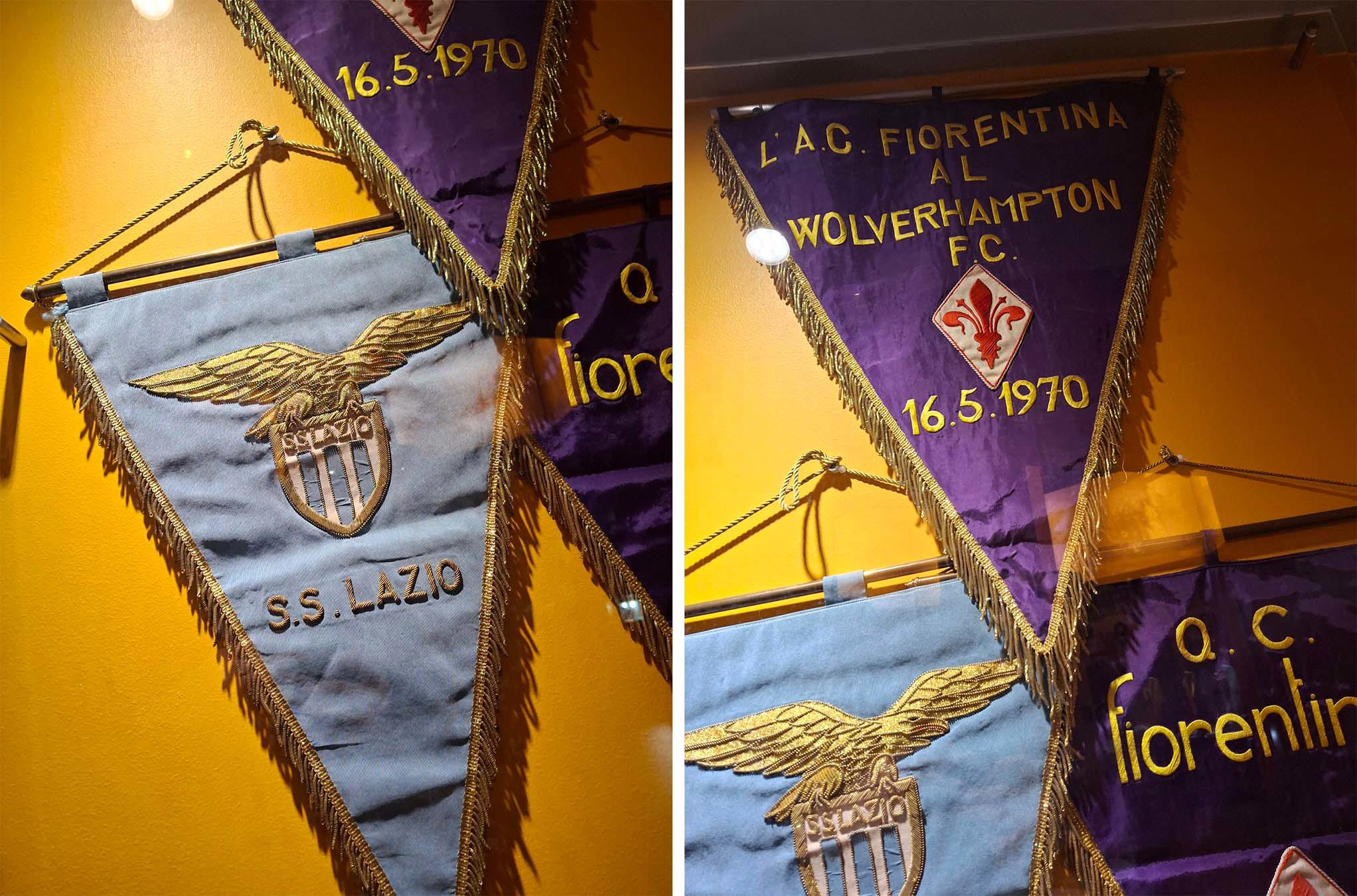
Wolves were one of the six English sides to compete in the inaugural competition, playing four games during May 1970 as they faced Fiorentina and Lazio home and away the group stages, while also facing a friendly against Forte dei Marmi in which Derek Dougan scored a brace and Hugh Curran also netted in a 3-0 win.
1970 Anglo-Italian Cup | Group 3
Friday 1st May 1970
Wolves 2 (Dougan 10, Wagstaffe 69)
Fiorentina 1 (Maraschi 86)
Attendance | 14,262
1970 Anglo-Italian Cup | Group 3
Saturday 9th May 1970
Wolves 1 (Bailey 63)
Lazio 0
Attendance | 11, 593
1970 Anglo-Italian Cup | Group 3
Saturday 16th May 1970
Fiorentina 1 (Amarildo 26)
Wolves 3 (Richards 52, Curran 60, Dougan 86)
Attendance | 13,120
*This was John Richards’ first ever goal in Wolves first-team.
1970 Anglo-Italian Cup | Group 3
Thursday 21st May 1970
Lazio 2 (Ghio 41, 64)
Wolves 0
Attendance | 43,073
Unfortunately, Wolves didn’t qualify for the next stage or take part in any more of the Anglo-Italian Cup editions in this era. The competition ran from 1970 to 1973 before becoming a semi-professional tournament between 1975 and 1986.
During the professional era from 1970 to 1973, England provided three of the four winners – Swindon Town (1970), Blackpool (1971) and Newcastle United (1973), while Roma won it in 1972.
In the semi-professional era from 1975 to 1986, only Wycombe Wanderers (1975) and Sutton United (1979) tasted victory, with all other winners being Italian. Wimbledon, Poole Town, Bath City (twice) and Sutton United (twice) all got to the final in this era.
The finals in this era were held in Italy at the Italian finalist home ground, namely Napoli, Bologna, Roma and Fiorentina.
The first final in 1970 saw Swindon – who took the spot ahead of Wolves and Middlesbrough due to goals scored – beat Napoli in their own stadium but the game was abandoned after 79 minutes. There had been two separate pitch invasions and the referee decided to abandon the game due to a barrage of missiles.
The Anglo-Italian Cup’s 90s return
The 1992/93 season saw the return of the Anglo-Italian Cup as a professional tournament for teams in the second tier.
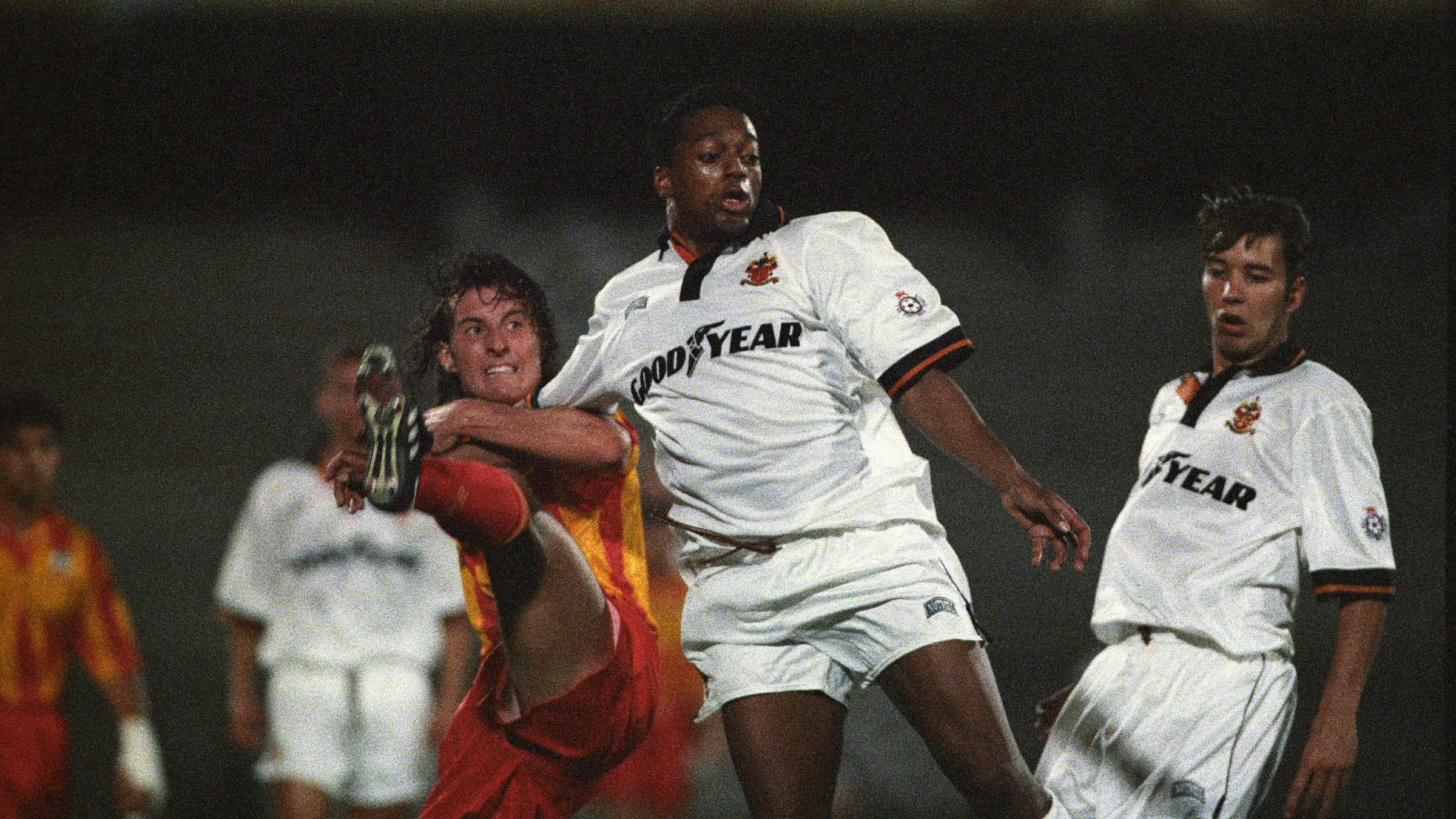
Wolves played in three out of four of the competitions in the 90s, firstly travelling to the Italian city of ‘Birkenhead’ to face Tranmere Rovers before welcoming Peterborough United at Molineux. Unfortunately, there were no Italian adventures this season.
1992/93 Anglo-Italian Cup | Preliminary round
Tuesday 15th September 1992
Tranmere Rovers 2 (Aldridge 69 pen, 88)
Wolves 1 (Birch 29 pen)
Attendance | 3,361
1992/93 Anglo-Italian Cup | Preliminary round
Wednesday 30th September 1992
Wolves 2 (C Taylor 4, Bull 46)
Peterborough United 0
Attendance | 3,091
Wolves’ home fixture against Peterborough United only attracted a crowd of 3,091 – the lowest home attendance for a first-team fixture since just 2,205 watched Wolves play Bury in the Third Division on 18th March 1986.
Wolves would not see a crowd at this level for a home competitive first-team fixture until 4,226 turned out for the FA Cup first round replay on Tuesday 19th November 2013 against Oldham Athletic.
The following season’s Anglo-Italian Cup was again short on European ventures for Wolves with a visit to Birmingham and a match against Stoke City at Molineux.
1993/94 Anglo-Italian Cup | Preliminary round
Tuesday 31st August 1993
Wolves 3 (Kelly 44, Bull 79, Keen 90)
Stoke City 3 (Carruthers 23, 38, Gleghorn 68)
Attendance | 9,092
1992/93 Anglo-Italian Cup | Preliminary round
Tuesday 14th September 1993
Birmingham City 2 (Wratten 68, 77)
Wolves 2 (Burke 66, Mills 86)
Attendance | 2,710
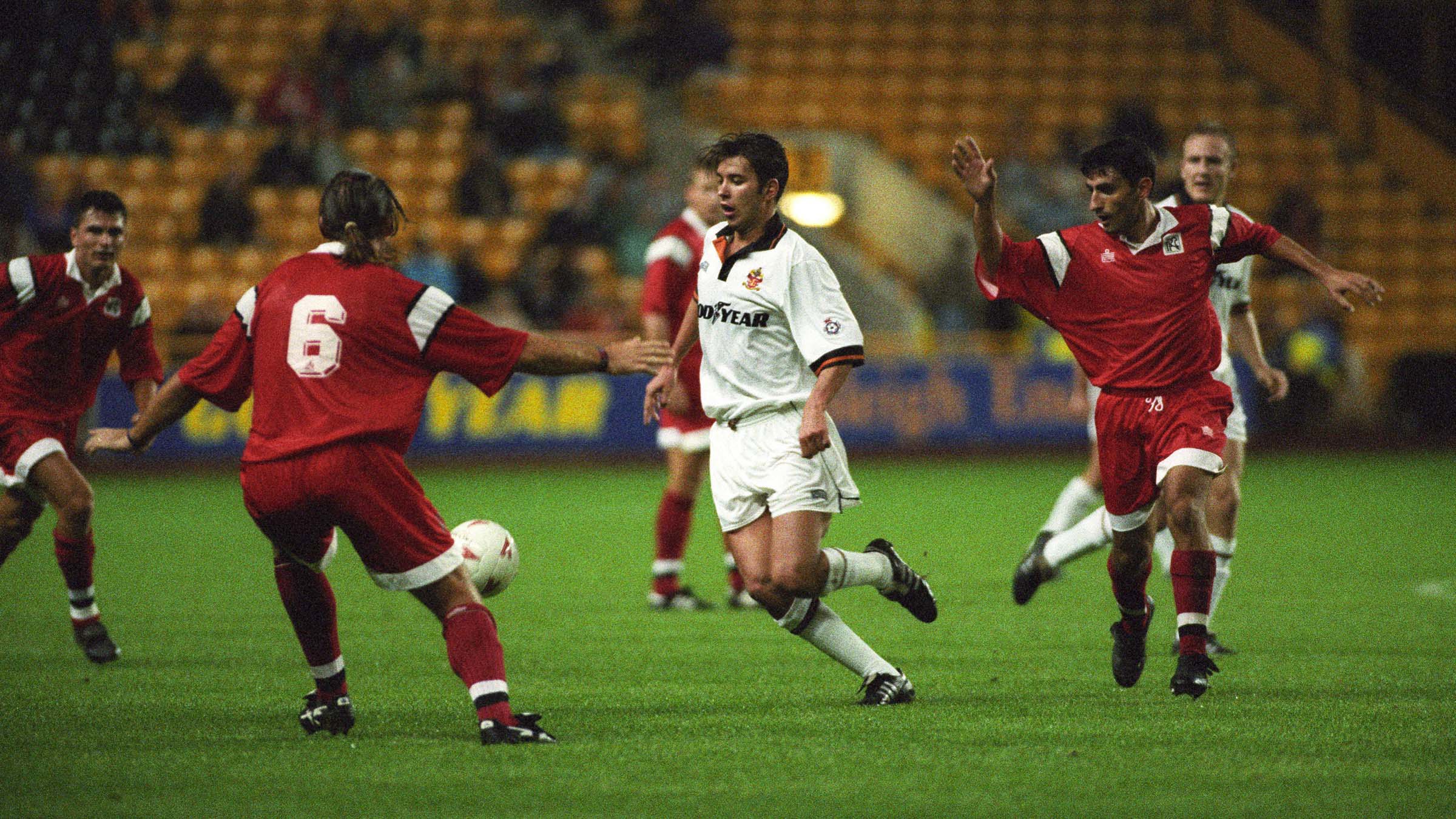
In 1994/95, Wolves finally faced Italian sides, as Ascoli and Atalanta came to Molineux, while Wolves got to travel to Italy to face Lecce and Venezia.
1993/94 Anglo-Italian Cup | Group A
Wednesday 24th August 1994
Lecce 0
Wolves 1 (Kelly 81)
Attendance | 1,795
1993/94 Anglo-Italian Cup | Group A
Tuesday 6th September 1994
Wolves 0
Ascoli 1 (Marcato 57)
Attendance | 9, 599
*Wolves played in all white in this game at home.
1993/94 Anglo-Italian Cup | Group A
Wednesday 5th October 1994
Venezia 2 (Rankine og 39, Vieri 59 pen)
Wolves 1 (Venus 28)
Attendance | 750
1993/94 Anglo-Italian Cup | Group A
Tuesday 15th November 1994
Wolves 1 (Mills 39)
Atalanta 1 (Bonacina 7)
Attendance | 7, 285
The Venezia game saw Wolves face Christian Vieri, who in 1999 became the world’s most expensive footballer when he moved to Inter Milan from Lazio for £32 million. This record has, of course, been broken many times since.
During this era, the Anglo-Italian Cup ran for four seasons, but Wolves didn’t feature in the last incarnation of the competition in 1995/96, and the Anglo-Italian Cup hasn’t appeared on the football calendar since. Nevertheless, it remains an interesting feature of footballing history.
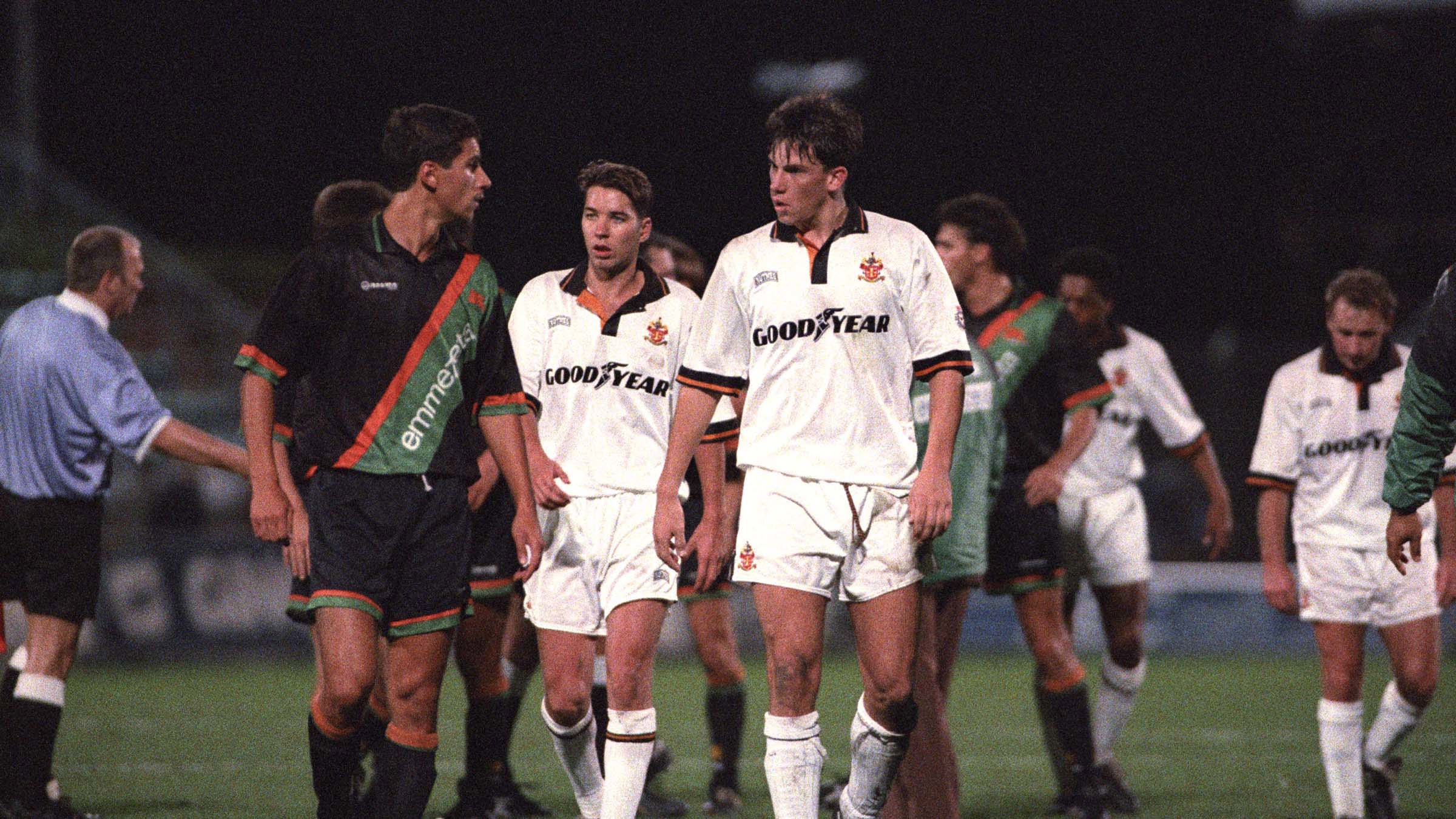
During the second professional era between 1992 and 1996, England only returned one winner when Notts County were victorious in 1995, after they had lost in the final the previous year to Brescia. Derby County and Port Vale also lost in the final in this era.
Three out of the four winners this time around were Italian while all of the finals in this period were held at Wembley. In total over the whole history of the tournament Italy returned a total of 15 winners and England six.
Will we ever see the Anglo Italian Cup again, probably not.
We’ll round off the story of Wolves’ European adventures next week as we focus on the Old Gold’s most recent return to continental competition and the 2019/20 Europa League campaign.
Wolves historian Pete Crump’s weekly articles reflecting on a range of topics from the club’s proud past will be available throughout the 150th anniversary season on wolves.co.uk.


