‘A home like no other: The story of Molineux’ by club historian, Pete Crump
Home to generations of Wolves supporters, Molineux has witnessed the club’s greatest triumphs and most dramatic nights.
Its distinctive character makes it one of the most unique stadiums in the history of the game, and as we celebrate our 150th anniversary, let’s take a look back over what makes Molineux so special.
This is part 3 of the series on Molineux. To read part 1, focusing on how the stadium first became Wolves’ home and the early developments of the ground, please click here, and for part 2, reflecting on the Molineux Street Stand rebuild, click here.
Sir Jack Hayward’s modern Molineux
The man who would transform Molineux arrived at just the right time.
By the start of the 1990s, the stadium had become badly run down, and the combination of the Popplewell and Taylor Reports meant redevelopment was no longer optional, but critical.
Fortunately for Wolves, in May 1990, Sir Jack Hayward purchased the football club for £2.11 million, and he hired architect Alan Cotterell to create a modern Molineux.
Born in Wolverhampton in 1934 and raised in Penn, Cotterell first became interested in the project after seeing an Express & Star article in 1990 estimating that rebuilding the stadium would cost £15 million. He thought the figure was unnecessarily high.
Just before Christmas that year, he contacted Wolves chairman and vice-president Jack Harris, who invited him to a meeting on 23rd December. Following the meeting, Cotterell spent Christmas redesigning Molineux.
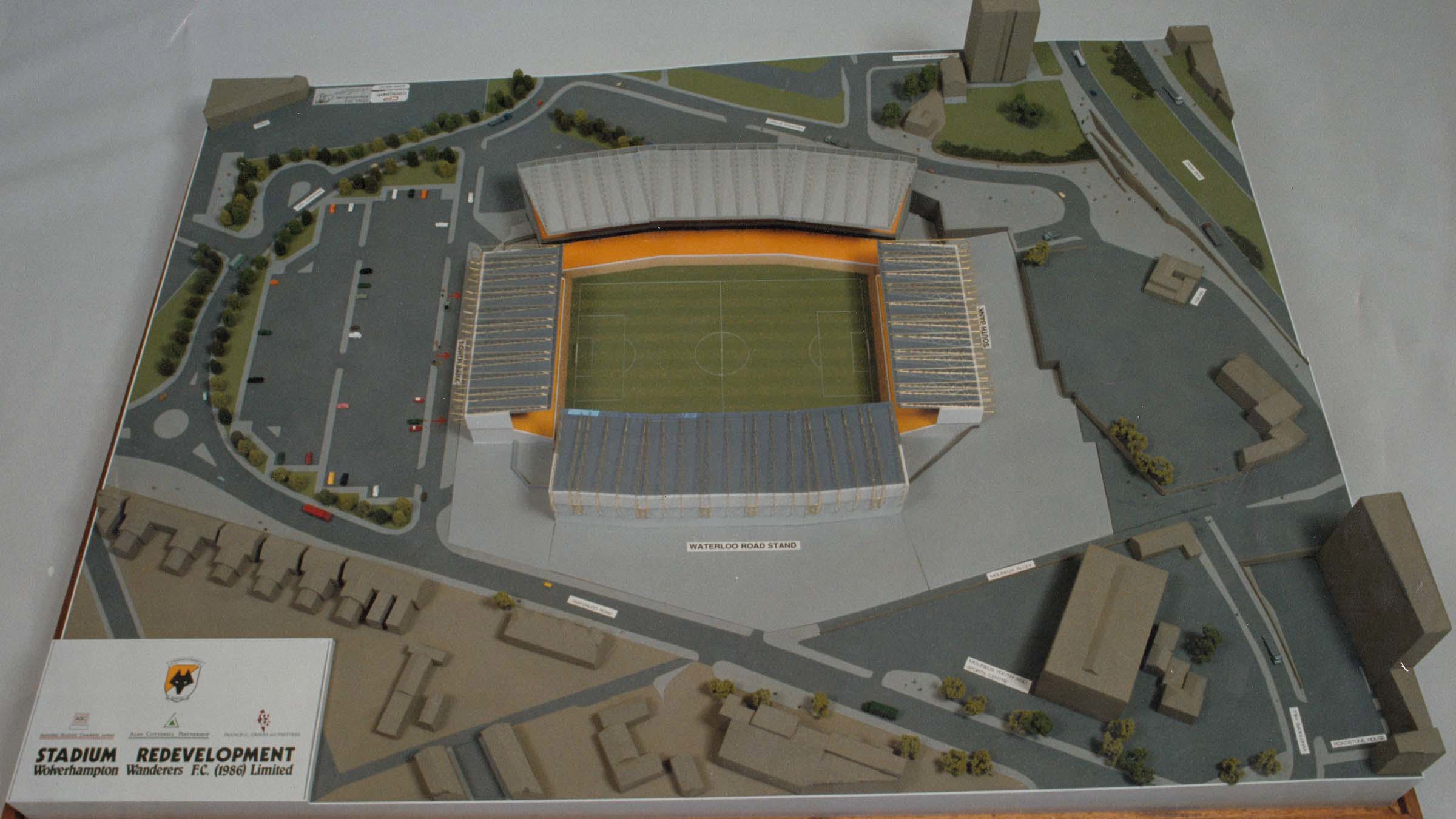
After showing his plans to Sir Jack, Cotterill was given the green light to become the architect of the new stadium.
The relationship between Cotterell and Sir Jack became central to the redevelopment and when celebrating his 90th birthday at Molineux in November 2024, he recalled to wolves.co.uk how developing the stadium was a mixture of his architectural brain and Sir Jack’s heart.
Hayward’s vision extended beyond simply constructing a modern football ground. He wanted Molineux to serve Wolverhampton and its community, with as much of the work as possible sourced locally.
Cotterell recalled that Sir Jack even objected when Dulux paint was being used instead of Wolverhampton-based Manders paint. Almost everything was eventually sourced locally, apart from the huge steel beam required for the North Stand. Local steel companies could not produce a beam of that length, so it had to be brought in from Germany.
While following the incidents of the 1980s, safety was a major priority for Cotterell. He oversaw the construction personally and even climbed onto the framework to ensure that lighting rigs fitted correctly. He became concerned about waste bins around the stadium and tested the stewards’ procedures by placing an unusual box inside one. When nobody checked it, Cotterell raised the matter with club secretary Keith Pearson, who reprimanded the stewards.
The rebuild begins
The 1991/92 season marked the beginning of Molineux’s transformation, with the redevelopment about to turn Molineux into a completely different stadium.
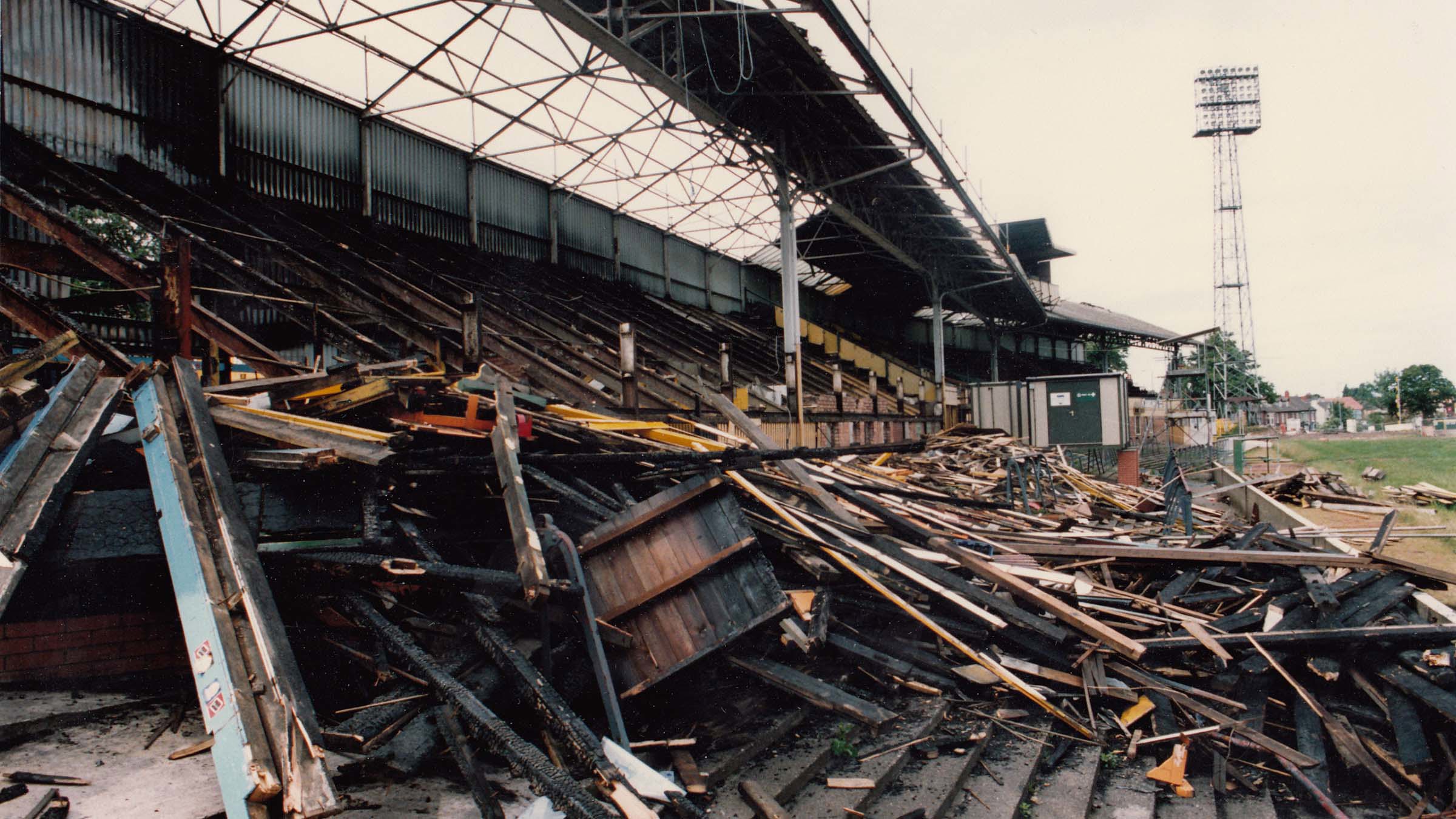
A new 125-year lease was signed in 1991, and demolition of the North Bank began in September. The stand had been unused since 1985, making it the logical starting point.
The early estimated cost of the development was £8.5 million, and Alfred McAlpine was announced as the contractor in October 1991. As the old North Bank disappeared, plans were made for the new north stand. In November 1991 it was also announced that work on the new Waterloo Road Stand would begin in summer 1992.
The first phase was already dramatically changing the appearance of Molineux before the strange events of May 1992.
In the final weeks before the end of the 1991/92 season, the condemned Waterloo Road Stand was the scene of a series of incident. On 27th April 1992, a small fire broke out in the stand, while a brick was also thrown through the window of club secretary Keith Pearson.
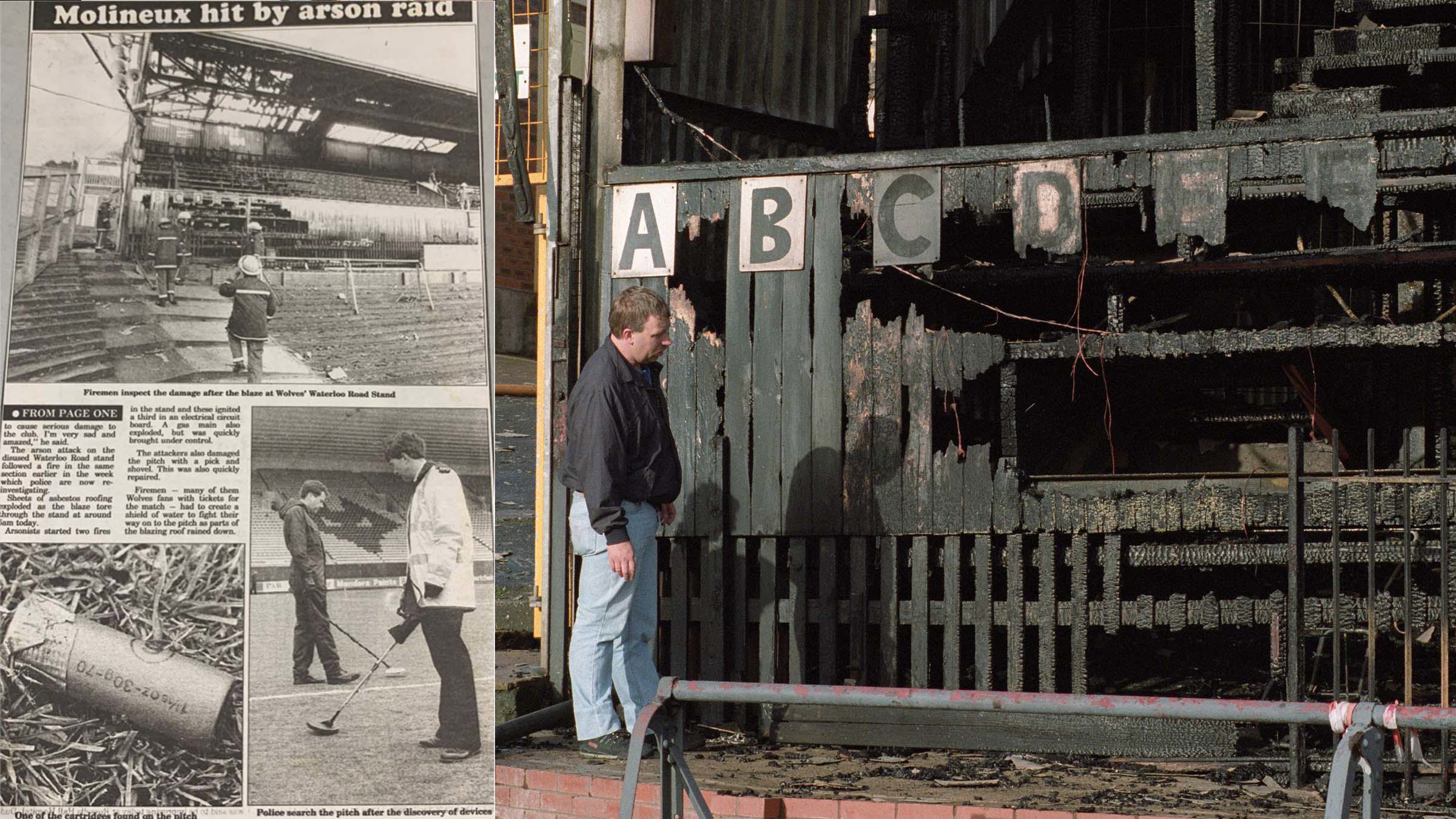
The first fire was attributed to an electrical fault, but suspicion grew when another fire broke out at around 5am on Saturday 2nd May.
There was also damage to the pitch involving pickaxes, while 32 gun cartridges were found, some containing nails. These incidents almost resulted in the final match of the season being postponed.
Fortunately for visitors Middlesbrough, the game went ahead, as Boro went on to win promotion to the inaugural Premier League at Molineux that afternoon.
The mystery surrounding the incidents was never fully resolved, and the Waterloo Road Stand was already condemned and due for demolition. Thankfully, nobody was injured or killed and the stand was demolished during the summer of 1992.
The Stan Cullis Stand
The new north stand, which was named in honour of legendary player and manager Stan Cullis, was already well advanced by May 1992 and was officially completed that summer.
It held approximately 5,500 supporters and included a new ticket office, club shop and bar. The shop remained there until 1996, when it moved into a new building constructed in the corner between the Stan Cullis and Billy Wright Stands. The building remains today, although it became the club’s ticket office in 2012.
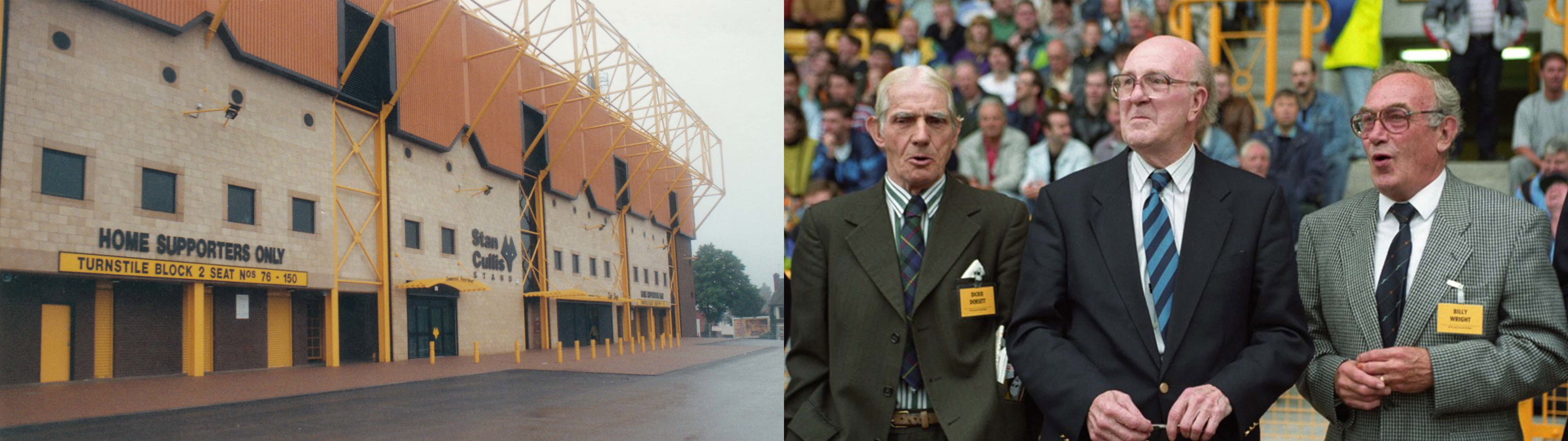
Wolves supporters first occupied the stand during a pre-season friendly against Arsenal on Friday 7th August 1992 ahead of the official opening and ribbon-cutting on Sunday 9th August during a Stan Cullis testimonial match against Aston Villa.
The game also saw the famous Molineux clock return for the first time in almost 15 years. After disappearing in 1979, the clock was mounted on the front of the new Stan Cullis Stand, positioned in the middle of the steel roof support.
Alan Cotterell later revealed that this particular component was the one part of the stadium that was not British-built and instead came from Germany.
The redevelopment also required changes away from the stands themselves. The demolition of the Waterloo Road Stand meant the dressing rooms and other facilities had to be relocated temporarily to portacabins between the Stan Cullis and Billy Wright Stands – roughly where the ticket office is today.
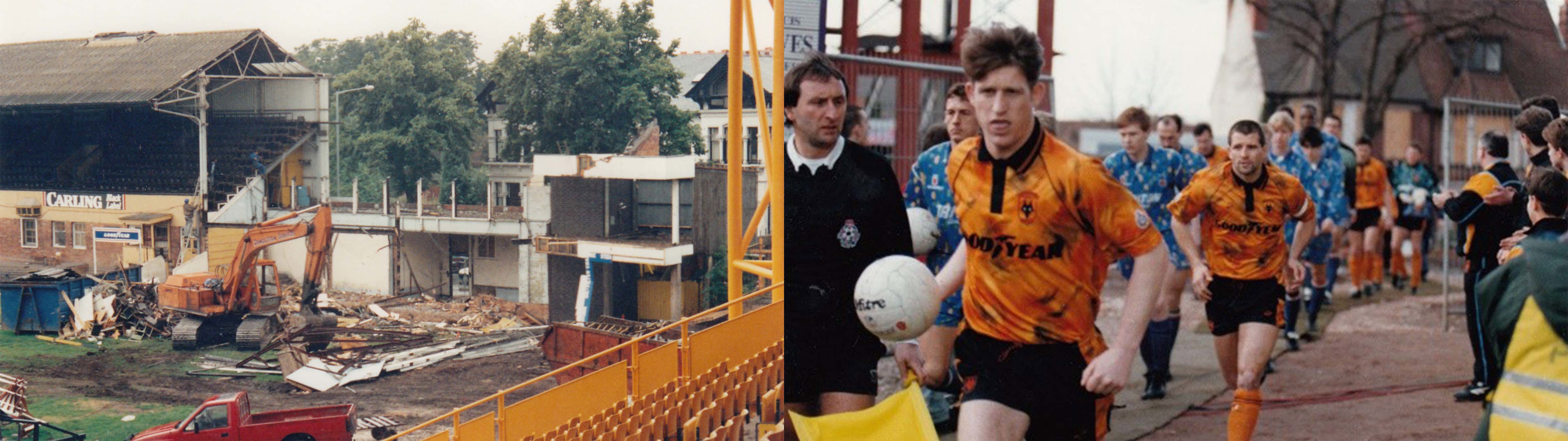
The pitch was also realigned and moved towards the John Ireland Stand so that it filled the gap which had been created when the stand was initially built and sat more naturally in relation to the new Stan Cullis Stand. Undersoil heating was installed, while the repositioning of the pitch also created more space for the new Billy Wright Stand.
Away supporters were also moved to the western side of the South Bank.
The end of the South Bank terrace
The 1992/93 season was the final campaign in which supporters stood on the famous South Bank terrace. The last match came on Saturday 1st May 1993, when Wolves defeated Millwall 3-1.
All four goals that day were fittingly scored in front of the South Bank. Shaun Bradbury scored twice and Mark Burke once for Wolves, while Millwall’s Malcolm Allen scored the final goal in front of the terrace.
Among those present was the late John ‘Fozzy’ Hendley, who would later become an important member of the Wolves staff. Sir Jack Hayward was also pictured on the South Bank that day.

At the end of the season, the old floodlights were removed and replaced by a lighting system along the front of the John Ireland and Billy Wright Stands.
The red seats in the John Ireland Stand which had been in place since the stand first opened in 1979 were also replaced with gold seats during the summer of 1993.
Some of the old red seats subsequently found a second life at the Bush Ground, home of Pelsall Villa until 2017.
The Billy Wright & Jack Harris Stands
With two stands ready, the new Waterloo Road Stand was next to open at the beginning of the 1993/94 season – named after another Old Gold legend, Billy Wright.
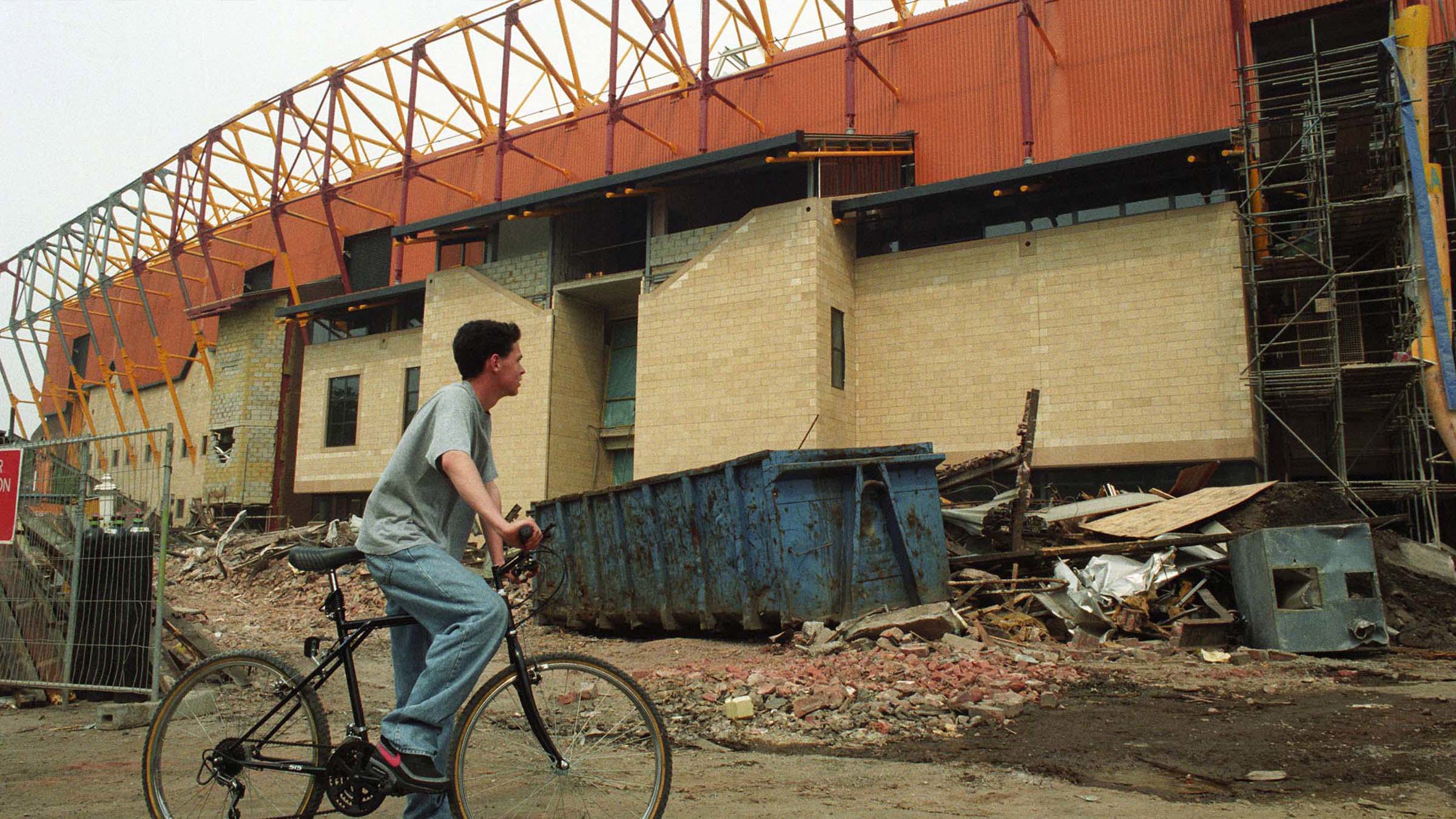
Wright had returned to Wolves in 1990 as a director and was one of Sir Jack Hayward’s earliest appointments following his takeover.
Sadly, Wright died on 3rd September 1994, shortly after the development of the stand which bared his name.
A minute’s silence was observed at Sunderland’s Roker Park that day, where Wolves were preparing to play when news of Wright’s death arrived. Tributes were also paid by thousands of supporters outside Molineux and during Wolves’ next home match against Tranmere Rovers on 10th September.
In 1996, a statue was unveiled at Molineux to honour the former England captain and first player to achieve 100 international caps. Created by sculptor James Butler, the statue remains one of the most recognisable landmarks at the stadium.
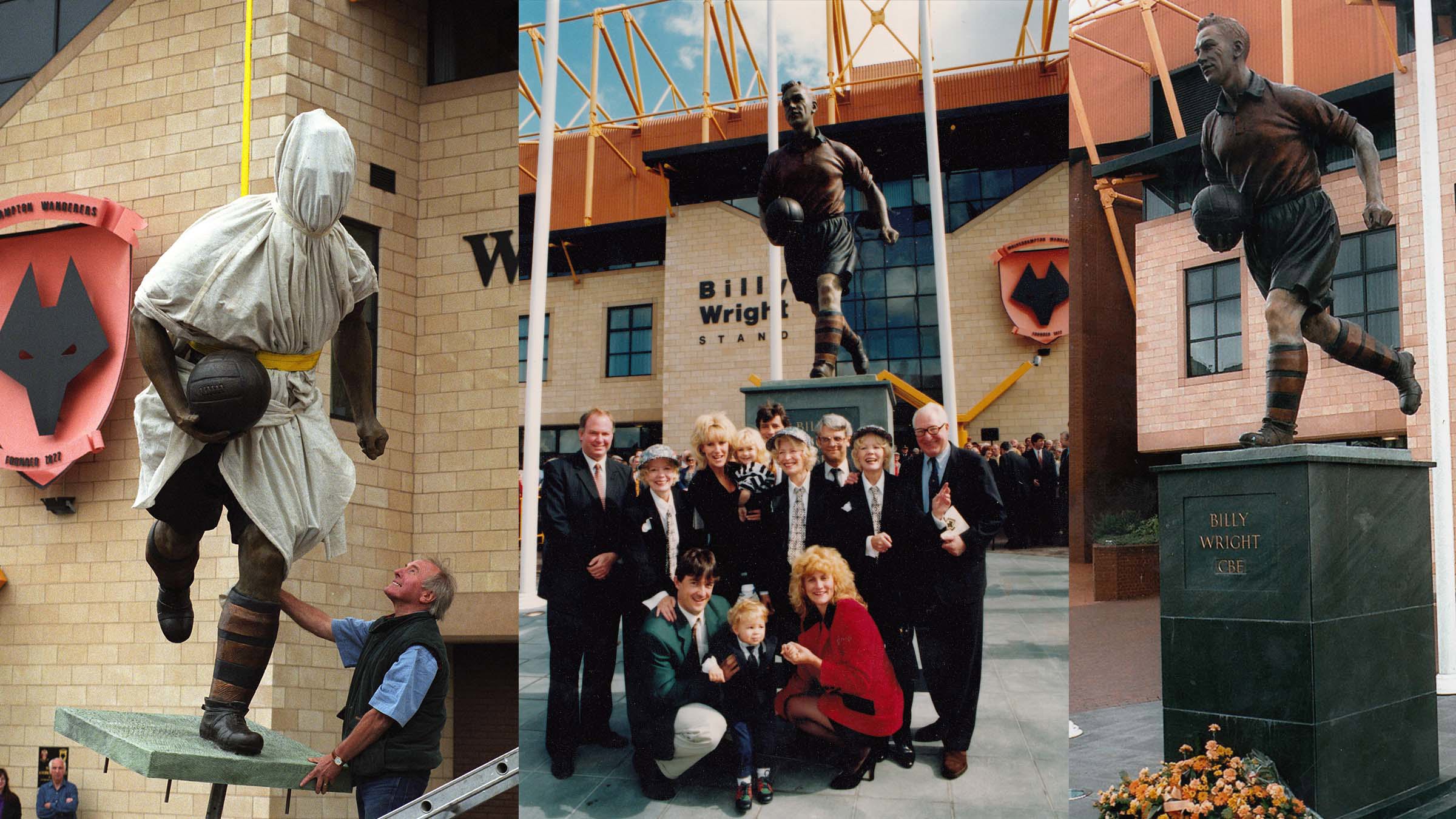
The Billy Wright Stand which the statue proudly stands outside officially opened on 14th August 1993 as Wolves played Bristol City.
It holds around 8,600 supporters as well as the club’s corporate facilities and the principal football and media facilities, including the dressing rooms, press areas and television gantry.
Just seven months after the South Bank terrace was demolished, the final new stand was opened in December 1993 having been built on the natural bank.
The newly named Jack Harris Stand completed the four-sided stadium and Sir Jack’s new Molineux was finally ready.
Molineux’s big unveiling
On 7th December 1993, Wolves played a special friendly against Kispest Honved to officially unveil the new stadium, drawing 1-1 with Andy Thompson scoring for the hosts.
Wolves’ special relationship with Honved goes back all the way to 1954 and the floodlit friendly which took place at the stadium between one of the best teams in England at the time and the Hungarian outfit, who were regarded as one of the greatest club sides in world football.
Wolves came out on top 3-2 that evening, in a result that would eventually lead to the creation of the European Cup and Champions League – but more on that in the coming weeks.
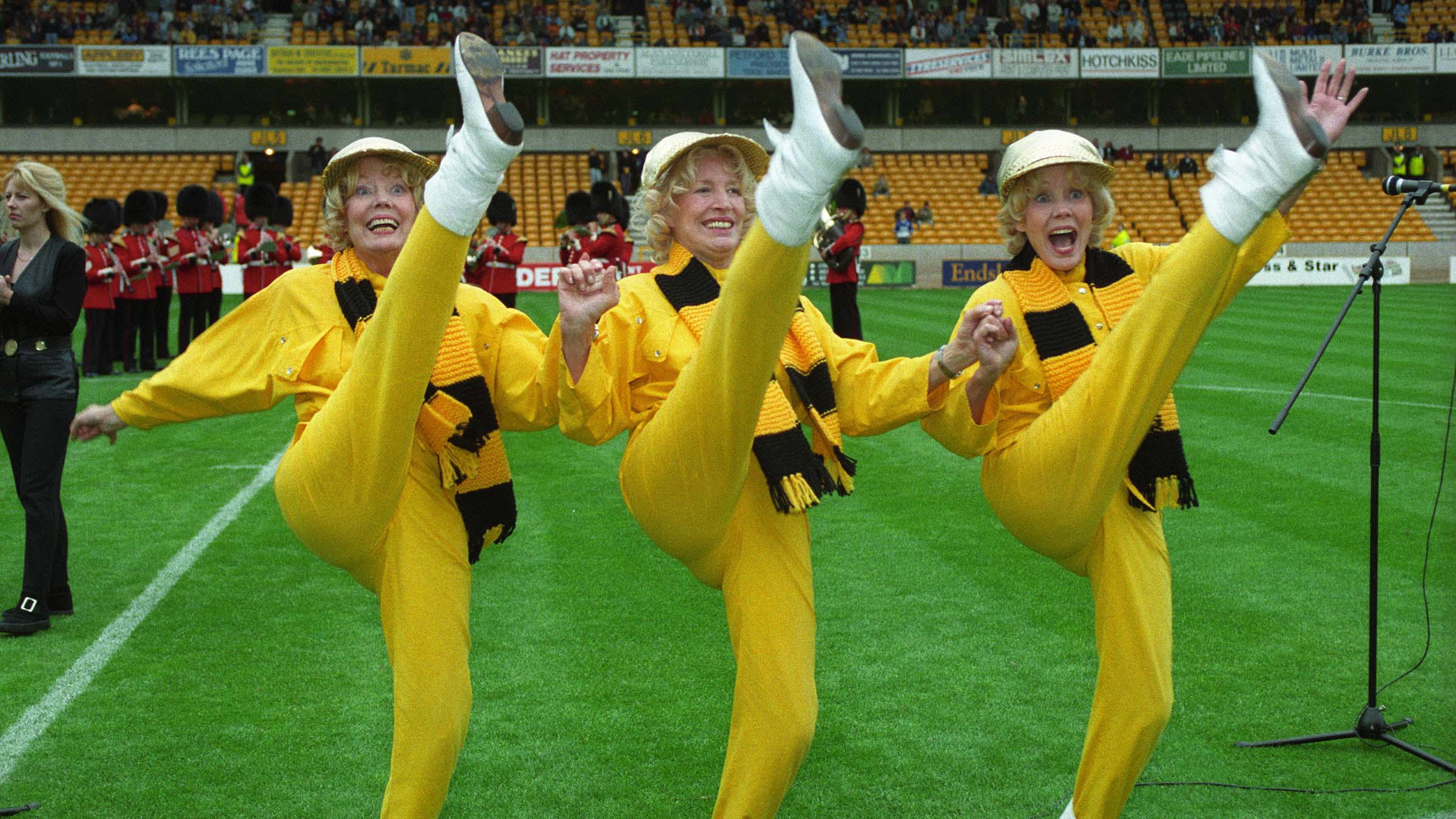
Four days after the Honved friendly of 1993, the first competitive match in the completed four-sided Molineux took place against Watford. Wolves won 2-0, with Steve Bull and Robbie Dennison scoring the goals.
It was fitting that the first three goals in the new stadium had been scored by Thompson, Bull and Dennison – three players who had played major roles in helping Wolves recover from the depths of the Fourth Division.
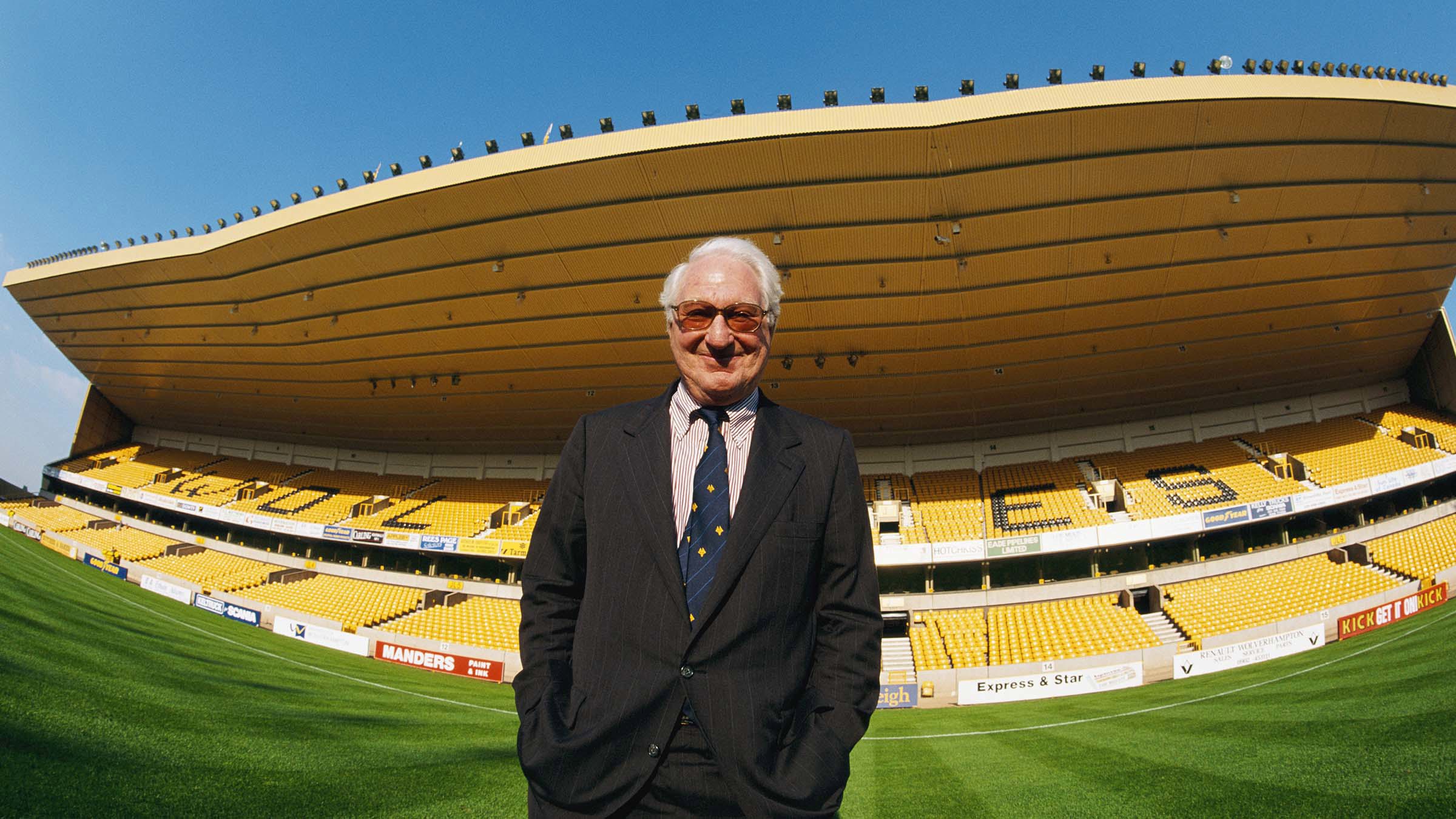
Between September 1991 and December 1993, three sides of Molineux had been completely rebuilt, the North Bank, Waterloo Road Stand and South Bank had disappeared, and in their place stood the Stan Cullis, Billy Wright and Jack Harris Stands, joining the John Ireland Stand.
The redevelopment had cost around £15-16 million and the stadium became known as ‘The house that Sir Jack built’.
We’ll round off the story of Molineux next week as we focus on the stadium’s changes during the 25 years which have made it what it is today and what still holds for the future.
Wolves historian Pete Crump’s weekly articles reflecting on a range of topics from the club’s proud past will be available throughout the 150th anniversary season on wolves.co.uk.


